PlatformIntegrationsResourcesDocsPricing
ContactLog inSign up
Intro to Composable Architecture
The Modern Enterprise Stack
The Rise of Composable Architecture
Key Parts of a Composable System
Microservices & Serverless Functions
How Microservices Work
Benefits of Microservices
Challenges of Microservices
Serverless Function Providers
The Backend: Databases & Headless CMS
Working with Composable Content
Types of Backend Services
Benefits of Decoupled Content
Common Challenges with Decoupled Content
Choosing the Right Backend Service
The Frontend: Web Frameworks
The New "Frontend"
Site Framework Considerations
Modern Frameworks for Enterprises
Content Editing in Composable Systems
Editing Experience in Monolithic Systems
Headless Editing Experiences
Visual Editing Services
Composable Content
Multi-channel Developer Challenges
Homegrown Content Meshing Solutions
Vendor-based Composable Systems
CI/CD: Building, Deploying, & Hosting
CI/CD for Monolithic Applications
The Build Pipeline
Build & Deployment Services
Common Website Features & Tooling
Authentication
Analytics
Personalization & A/B Testing
Form Submissions
Search
Common Enterprise Challenges
Technology Cost
Security
Traffic & Scalability
Page Speed Performance
Code Complexity
Continuous Integration & Delivery
Getting Started: Migration Strategies
Gradual Migration
Evaluating Tools & Services
Wrapping Up: Is Composable Worth It?

Working with Composable Content

The Backend: Databases & Headless CMSTypes of Backend Services
Trust CenterPrivacySecurityGDPR/CCPAAbuse
©2023 Netlify
On This Page
Decoupled content services
Using multiple backends
Frameworks handling content

In a monolithic application, the content is all part of the same system. You’ve either completely configured the content database, or you’re relying on a framework to do that for you.

Decoupled content services

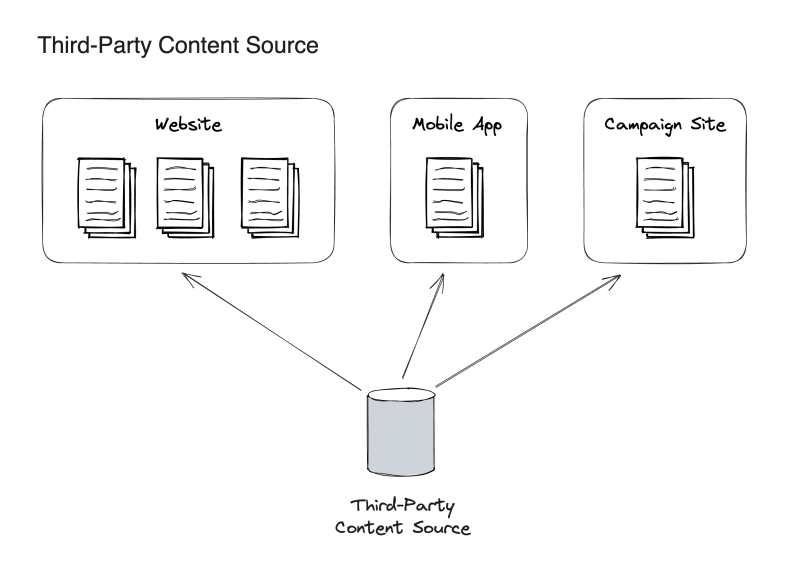
With composable systems, content and data are decoupled and retrieved by frontend projects via an API. This decoupling often means delegating the entire content infrastructure to a third-party service.
Using multiple backends

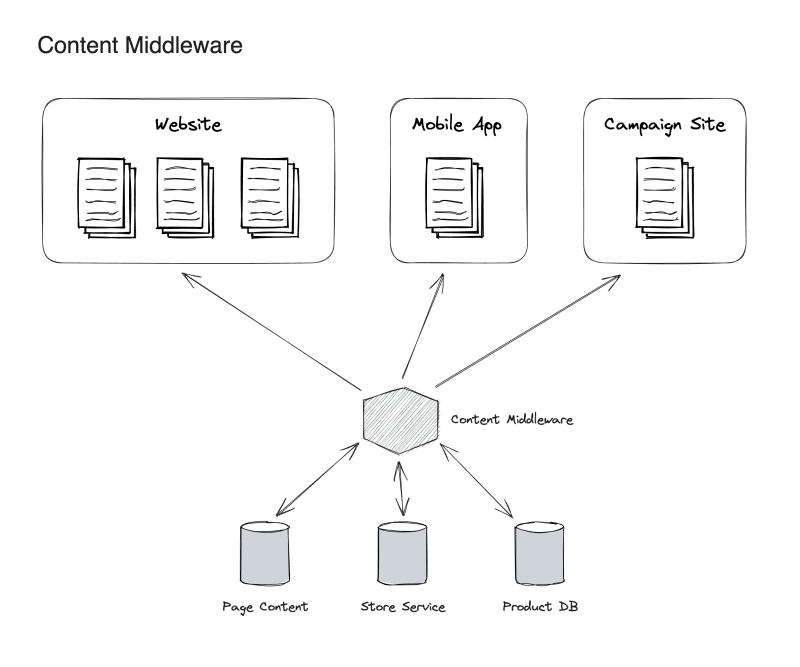
In many cases, especially at the enterprise level, you’re sourcing content from multiple providers, as each provider tends to specialize in some focused offering. For example, you may keep page data in a more traditional CMS type of service, while you may hold product information in a service already configured to handle payments and other e-commerce needs.

In these cases, enterprises often build content middleware that stitch together all these sources into a single source of truth. We’ll talk more about that in an upcoming chapter.
Frameworks handling content

Some emerging site frameworks have begun helping with content retrieval. However, as we’ll see in the next chapter, this tends to be an attribute with frameworks geared toward hobbyist projects. Those ready to serve enterprises typically leave content integrations to the developers.

Third-Party Content Source
Content Middleware
Content Middleware