PlatformIntegrationsResourcesDocsPricing
ContactLog inSign up
Intro to Composable Architecture
The Modern Enterprise Stack
The Rise of Composable Architecture
Key Parts of a Composable System
Microservices & Serverless Functions
How Microservices Work
Benefits of Microservices
Challenges of Microservices
Serverless Function Providers
The Backend: Databases & Headless CMS
Working with Composable Content
Types of Backend Services
Benefits of Decoupled Content
Common Challenges with Decoupled Content
Choosing the Right Backend Service
The Frontend: Web Frameworks
The New "Frontend"
Site Framework Considerations
Modern Frameworks for Enterprises
Content Editing in Composable Systems
Editing Experience in Monolithic Systems
Headless Editing Experiences
Visual Editing Services
Composable Content
Multi-channel Developer Challenges
Homegrown Content Meshing Solutions
Vendor-based Composable Systems
CI/CD: Building, Deploying, & Hosting
CI/CD for Monolithic Applications
The Build Pipeline
Build & Deployment Services
Common Website Features & Tooling
Authentication
Analytics
Personalization & A/B Testing
Form Submissions
Search
Common Enterprise Challenges
Technology Cost
Security
Traffic & Scalability
Page Speed Performance
Code Complexity
Continuous Integration & Delivery
Getting Started: Migration Strategies
Gradual Migration
Evaluating Tools & Services
Wrapping Up: Is Composable Worth It?

Editing Experience in Monolithic Systems

Content Editing in Composable SystemsHeadless Editing Experiences
Trust CenterPrivacySecurityGDPR/CCPAAbuse
©2023 Netlify
On This Page
Previewing in monolithic applications
Meshing content sources in monolithic databases

In the early days of composable systems, developers could feel an overnight shift in the experience of building a website. Editors, on the other hand, took a step backward.

Previewing in monolithic applications

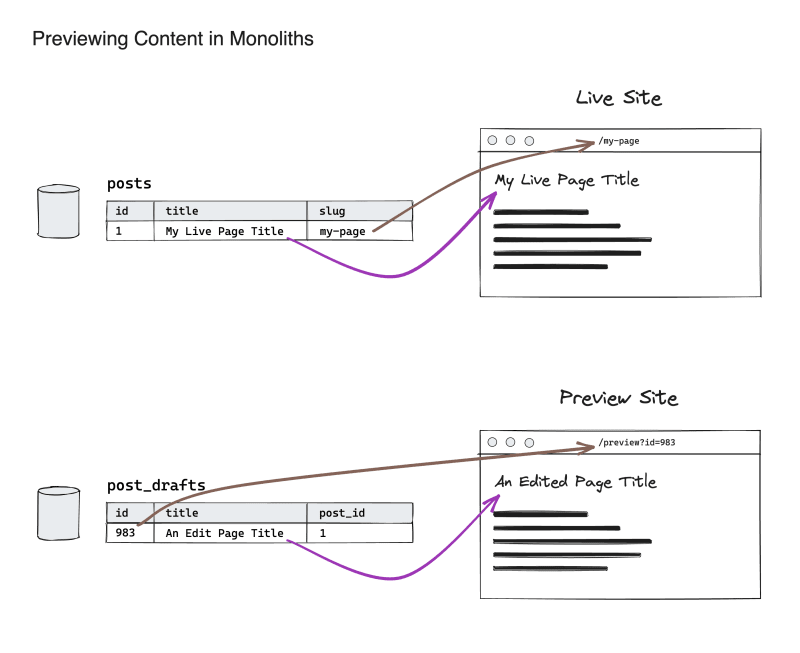
Consider a monolithic framework like WordPress. (Almost) everything the site needs is right there in the framework code or the database used by the framework.

When an editor makes a change to a page, they can save that change and preview it in context before publishing. This is because pages in this system simply query a database and then parse through some templating language.

It’s a fairly trivial amount of work to store a temporary record in the database and enable an authenticated user to view that content.
Meshing content sources in monolithic databases

Typically, in a monolithic system, all the content a site needs is going to be available in its database. Everything that can be edited on the site can be done within the system, with the help of some authentication system.

And even if content needed to come from somewhere else, like a separate site or e-commerce application, that could be ported into the monolith’s database as needed.

As we'll see, this takes a bit more coordination in distributed systems, but it results in capabilities unmatched in monolithic systems.

Previewing Content in Monoliths