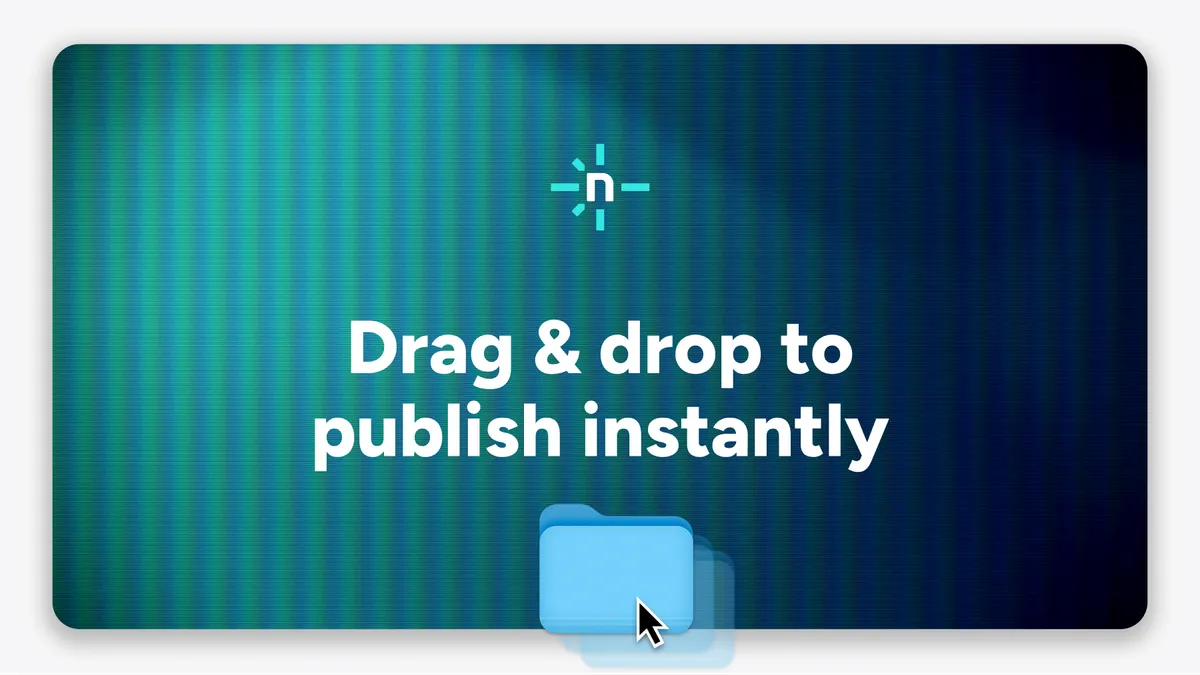
Find a folder on your computer with a web project in it, an index.html and whatever goes with it, and drag it onto netlify.com/drop. A few seconds later, Netlify gives you a live URL. You don’t need an account or any setup. Claim the site if you want to keep it; otherwise, it expires on its own.
That capability turned thirteen this summer. We’ve offered anonymous drag-and-drop deploys since 2013 and opened the same flow to AI agents in 2023. Among users who signed up in June 2026, more than 60 percent made their first deploy this way.
I joined Netlify to lead product less than two months ago and started digging into Drop’s history. The trail led from a prototype built in one summer, a Hacker News launch that went sideways, a 2020 memo arguing that we should kill Drop, and then finally to its second life as infrastructure for AI agents.
The summer of 2013
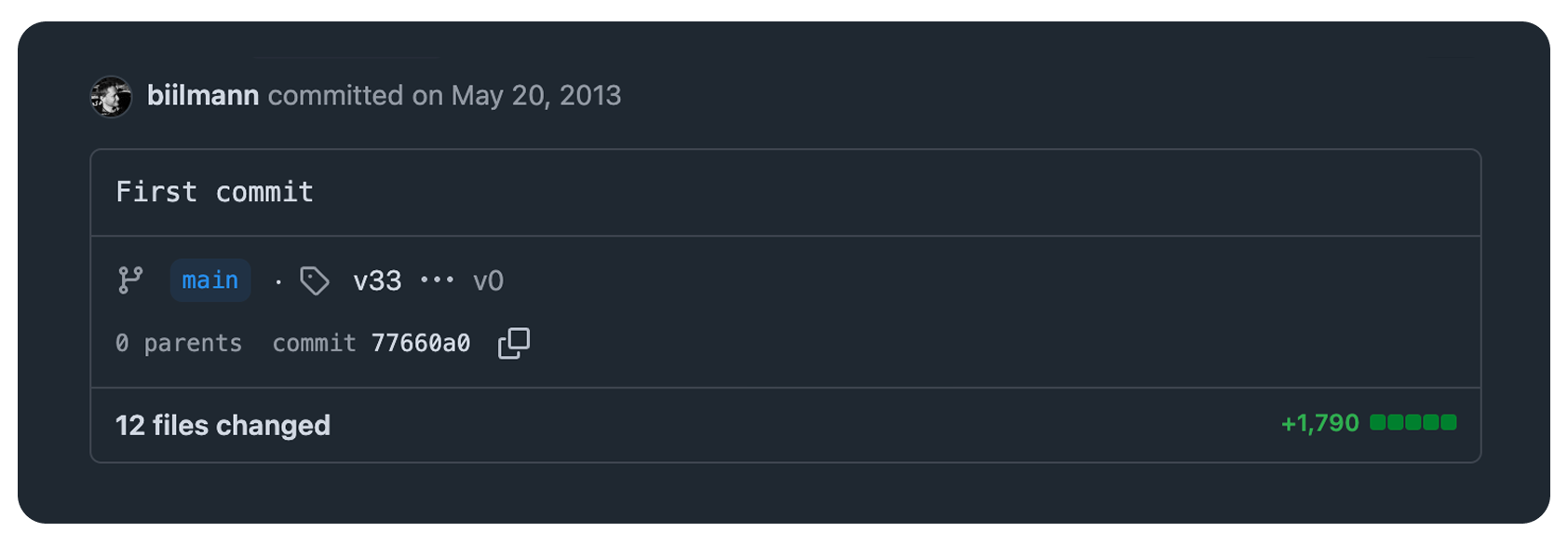
On May 20, 2013, Mathias Biilmann, Netlify’s cofounder and CEO, pushed a change titled “First commit” to a repository called bitballoon. I would love to link you to it, but that repository became the API that runs Netlify in production, so it’s private. You’ll have to settle for some screenshots.
At the time, Mathias was running Webpop, a cloud CMS for designers and agencies. His users kept bending it toward the same job: they didn’t want to manage content, they wanted a fast way to host a landing page with a working form on the web. So he built the smallest product that did that job. In a later Scrimba podcast, he described how “you drag a folder with the front end of a website onto the website and it would instantly get published on a URL.”
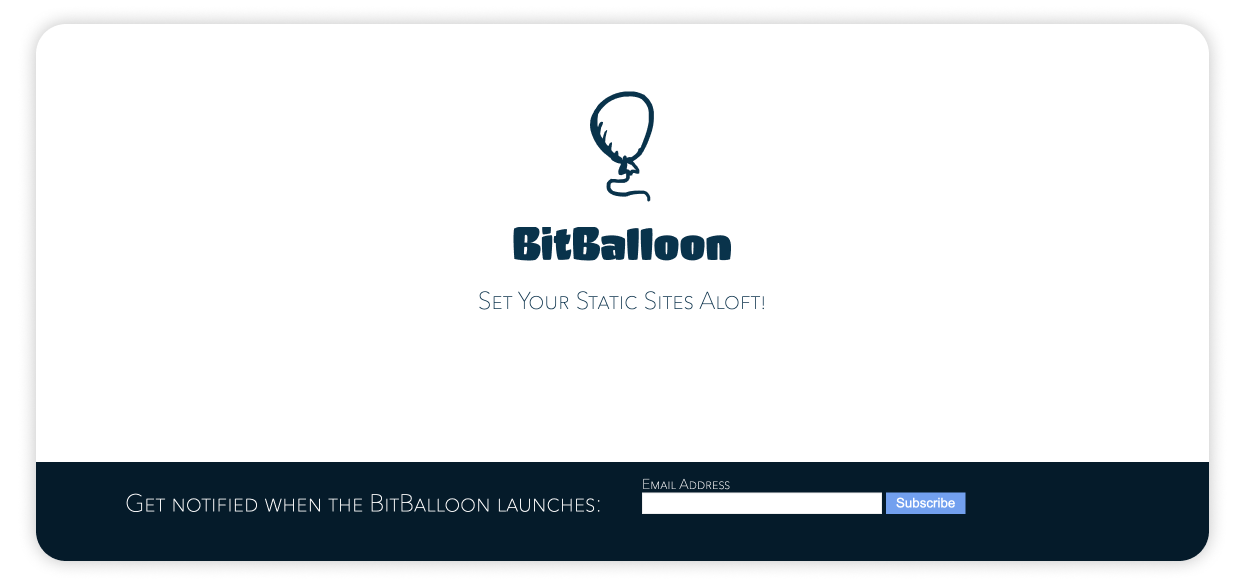
If you read the commits in order, you can follow Mathias and one collaborator building the idea over three months. They added zip uploads and form handling in May, then deploy screenshots in June. On June 11, in the same commit that turned the design blue, Mathias added the random name generator that still assigns site names: “Added name generator and blued the design.” He called the admin panel gondola, after the basket under a balloon. By July, bitballoon.com had a pre-launch splash page that read “Set Your Static Sites Aloft!”
Two commits in July helped to define the product. On July 18, Mathias wrote, “Don’t let people upload dynamic websites or sites with lots of pages.” BitBalloon served static sites, a constraint that would last for many years. Four days later came “Fix permission issue when unlogged user tries to delete his new unclaimed site,” as anonymous visitors were deploying sites they hadn’t claimed.
Another contributor in the repository that summer added the drag-and-drop interaction at the end of July with the message “detect browser support for file drag and drop & provide feedback.”
On August 27 at 18:13 UTC, Mathias merged a commit titled “Remove beta wall.” Ten minutes later, he posted “Show HN: BitBalloon, insta-deployment of static sites with forms that just work.” That was the whole launch plan.
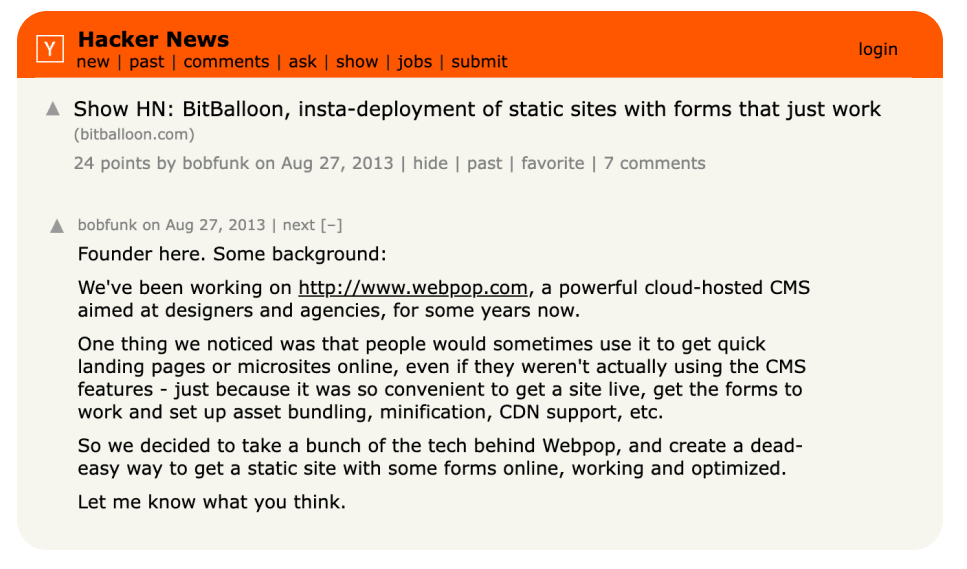
The thread reached the front page, collected 24 points, and fell to page 3 within minutes as the post had tripped Hacker News’s voting-ring detector. Of course, there was no voting ring, only friends who had heard about the launch, and YC eventually confirmed it was a false positive. Mathias later put a screenshot of the ranking anomaly on a BitBalloon site, so the product ended up hosting part of its own launch story. Hacker News would rediscover Netlify Drop eight years later.
”A pro-version of BitBalloon”
BitBalloon convinced Mathias and his friend and Netlify co-founder Chris Bach that the idea underneath it, frontend hosting that stands on its own, was bigger than a side project. As Mathias tells it, Chris’s reaction was “This sounds like a whole new category.” The two founded Netlify, a new company built around git: connect a repository, and your master branch is your website. Netlify launched out of private beta in March 2015.
I’ve heard the history compressed into “BitBalloon became Netlify,” but BitBalloon was never renamed or acquired. It kept running beside Netlify for three years as the simple drag-and-drop product.
Chris announced Netlify, of all places, on BitBalloon’s blog in a post titled “Netlify, a pro-version of BitBalloon.” He wrote in November 2015, “BitBalloon isn’t going anywhere. It’s a stripped down version of netlify, where we focus on simple drag’n’drop deploying of static sites.” At the time, Chrome was the only browser that let you drag a whole folder into a page; Firefox users had to zip it first.
Netlify folded BitBalloon into Drop during the summer of 2018. The team added the /drop endpoint on July 30 and merged the frontend on August 8 behind an A/B-test cookie. Drop began as a split test. On August 14, 2018, Phil Hawksworth announced Netlify Drop: “the natural evolution of BitBalloon, which has been providing simple drag-and-drop website deployments for years.”
Drop launched with a 24-hour window to claim an anonymous site. As far as I can find, no one submitted the launch to Hacker News.
The feature we almost killed
By 2020, people inside Netlify disagreed about Drop. New users could publish a working website within a minute, before Netlify asked them for anything. Abusers used the same path for phishing pages, fraud campaigns, and junk sites. That November, an internal memo titled “Let’s Sunset Netlify Drop” argued that the feature did us “more harm than good.” The author also recorded the counterargument: killing Drop would crater activation because no other path came close to its rate of first-deploy success.
A year after the memo, a Hacker News thread surfaced the same tension in public. In November 2021, someone submitted Drop to Hacker News with no launch or announcement behind it, and the post collected 349 points. One commenter wrote, “Reminds me of of good old PHP shared hosting days. It was so much fun to just write my code and then just drop the folder over Filezilla and everything just works!” Another asked, “How is this not abused to hell?” Netlify was working through that question while developers kept recommending Drop because it was easy to use.
Netlify reduced abuse by changing the mechanics over several years. In January 2022, the team cut the claim window from 24 hours to one and capped anonymous sites at three per IP address. After a 2024 fraud wave in which most reported scam sites turned out to be drops, the team password-protected anonymous sites until someone claimed them. Your drop is available to you as soon as it uploads, but Netlify does not make it public until someone attaches an identity to it.
By early 2025, an internal engineering memo counted about fourteen million unclaimed anonymous drops. This analysis led to a retention policy that suspended unclaimed sites, then deleted them a week later. The policy gave Netlify a way to clear the backlog without adding a signup step to the deploy path.
Beginners first, agents later
In 2023 we shipped a ChatGPT plugin that let ChatGPT deploy a generated site to a live URL with no Netlify login. The plugin used “the same endpoints that powers Netlify Drop.” You ask for a website, the agent drops it, and a claim link waits for whoever wants to keep it. Mathias wrote this month that Netlify “pioneered the Deploy anonymously, claim later flow for Agents that so many other companies have adopted,” starting with that plugin.
An agent building a site on someone’s behalf has no Netlify account or credentials. It needs to put the result on a URL and let a human decide whether to keep it. Drop had supported that flow since 2018. The same anonymous path helped beginners publish and gave agents a way to hand their work to a person.
By 2024, Netlify was offering the claim flow as partner infrastructure. AI builders such as Bolt now deploy their users’ sites through the same system that handles a dragged folder. We now publish instructions for agents themselves at netlify.ai, which gives an agent step-by-step directions for deploying to Netlify and returning a live URL to its user.
Among users who signed up in June 2026, more than 60 percent made their first deploy through the drag-and-drop deployment path.
Thirteen years later
This summer, Netlify gave Drop its biggest update since 2018. The drop page has a fresh design, you can redeploy a drop, connect a custom domain, and keep building on it like any other Netlify project.
The team also removed the constraint from Mathias’s original commit that restricted the upload of dynamic websites or sites with lots of pages. You can now drop a project that needs a build step, and Netlify will build and deploy it. That static-only rule had stood since the second month of the repository. Mathias wrote the build support himself, thirteen years after committing the constraint.
Across the commits, memos, and Hacker News threads, I found the same product habit: shorten the path from “I made something” to “it’s on the web.” Mathias set that standard in 2013, and the team has measured its work against it ever since. What’s changed is what sits behind the drop zone. A dragged folder now lands on the same platform that builds framework projects, runs full-stack apps, and deploys sites for AI agents at netlify.ai.
Find a folder with a web project in it and drag it onto netlify.com. Claim the site if you want to keep it. Netlify will still give it a slightly ridiculous name from the generator Mathias added in the summer of 2013.
Drop, dated
- May 2013: First commit to bitballon. Drag-and-drop deploys ship that summer.
- August 2018: BitBalloon becomes Netlify Drop.
- 2023: The ChatGPT plugin opens the anonymous deploy-and-claim flow to AI agents.
- 2024: Partners like Bolt deploy users’ sites through the claim flow
- Summer 2026: Drop gets build support and a fresh design